There are many ways to share and get ideas to spread within a culture. Creating a "profession," as in Feldenkrais Professional Training Program is one of those ways. Many people have gone this route, including Anat Baniel with her Anat Baniel Method and Mia Segal and her daughter, Leora Gastor with MindBody Studies. Those are just a few notable examples, there are many others.
For my personal needs and for the experimental learning that I engage in, I do not find professionalization to be appealing. I find it limiting. You may have a different idea and that is fine. There is not a right and wrong way to share somatics. There is a right way for you - and for me (for now).
Professionalization is a way - a possibility - a strategy.
The Universal Feldenkrais Church.
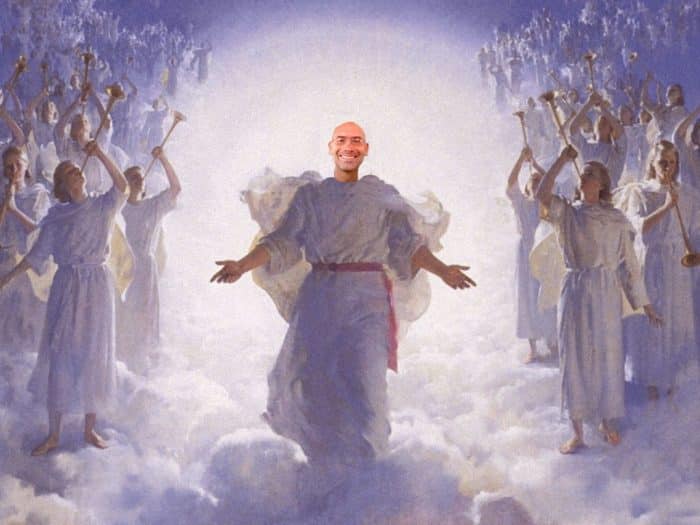
One could also create a religion out of somatics. I was joking recently with a friend about creating the "Universal Feldenkrais Church," which could be called th UFC. And every year, we could have a UFC Championship! Just like the folks who do the Ultimate Fighting Championship. I was joking, but also serious. I have no desire to create a somatics religion. But if someone wanted to do so, it could be a valid way to get people to do somatics.
Somatics as an Academic Discipline
Another route would be to turn somatics into an academic specialty within a univerity. It could become a specialty with degrees, committees, peer review, and conference hotels filled with people giving 20-minute PowerPoints about the biomechanics of awareness. Universities love turning living practices into structured disciplines — they know how to manage courses, credits, and committees.
Again, regradle of whether you or I or anyone else likes it, it could work. Someone could build an entire somatics department with tenure tracks, jargon, and theoretical models polished enough to get you published in journals with names like The Quarterly Review of Embodied Action. One could argue that the Feldenkrais Guild system is already attempting this with its research committees and foundations and such.
It’s a strategy.
Somatics as a Medical or Clinical Specialty
Somatics could be grafted onto or integrated within medicine, whether taught to MDs, Physical Therapists or even Dentists. The work would become a quasi-medical specialty — turning it into a protocol, certification, or something that fits neatly into a clinic billing code.
By attaching somatics to institutions that already have authority, it would give the work credibility to some people. And would probably attract people who feel safer with an official label. Someone might be able to create the “Certified Neuro-Somatic Practitioner (CNSP)” pathway with a board exam and laminated badges,
Again, nothing wrong with it. It’s one more narrative about what the work could be.
Somatics as a Lifestyle Brand
There’s also the influencer route — turning somatics into a lifestyle brand with a recognizable look, tone, and online identity. You can already see wonderful examples of this on YouTube. Both Alfons Graber and Taro Iwamoto have recognized channels each with its own recognizable vibe and focus
Someone could take that energy and build “The Somatic Lifestyle™” — complete with merch, mugs, hoodies, challenges, branded colors, and a signature aesthetic — I have no doubt someone could create a brand that would spread quickly. We’re visual creatures. We like signals of belonging.
I want for myself, and for those who are interested, the maximum flexibility to benefit from the work and to develop as a person. One has to be aware that when you adopt a social identity as practitioner, priest, doctor or influences there are many social norms and legal rules that come into play.
These norms and rules may not support the organic growth that YOU want as a unique individual.
So you have to experiment, stay true to what you want and let go of anyone who tries to mold you to their ideas. As Feldenkrais said in many ways, "it must be good for you". It must be good for you and not for the profession, religion, or influencer
Enjoy!
